What Your “Hello” To Random Dogs Quietly Reveals About You
Jan 6, 2026 | Tips and Tricks

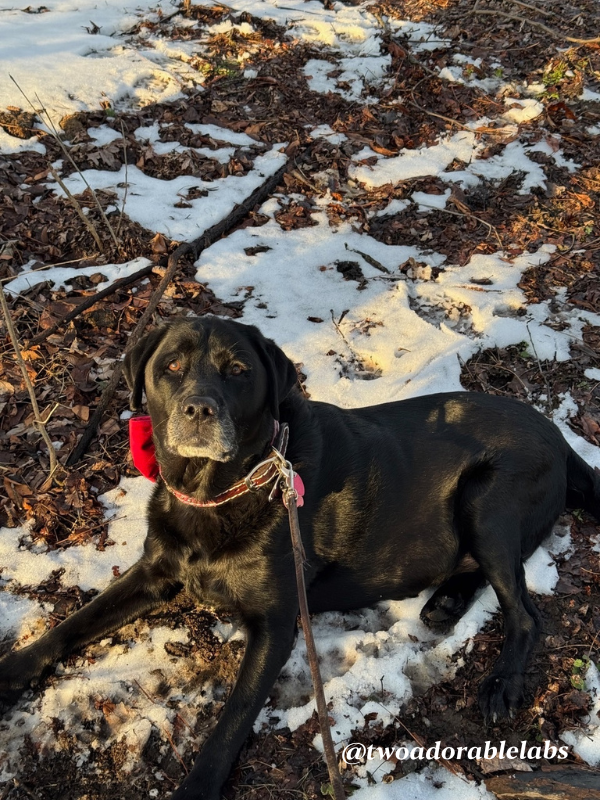
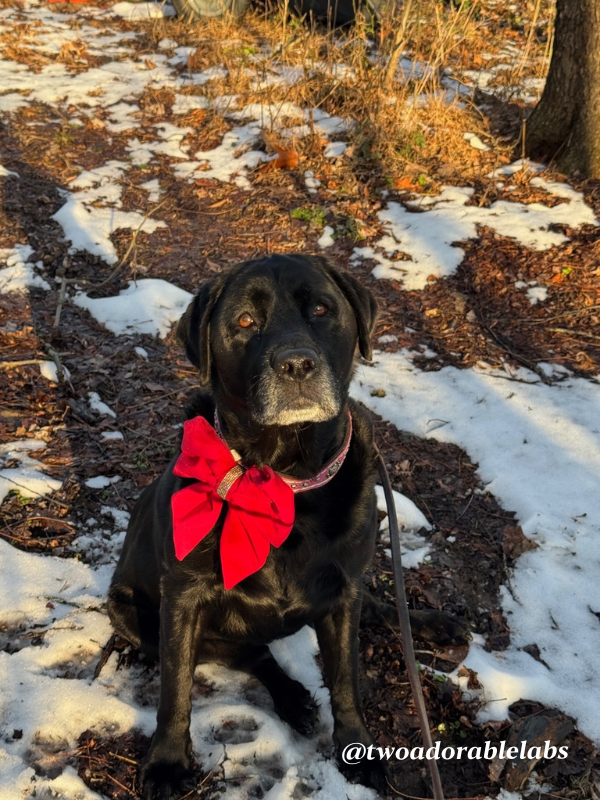
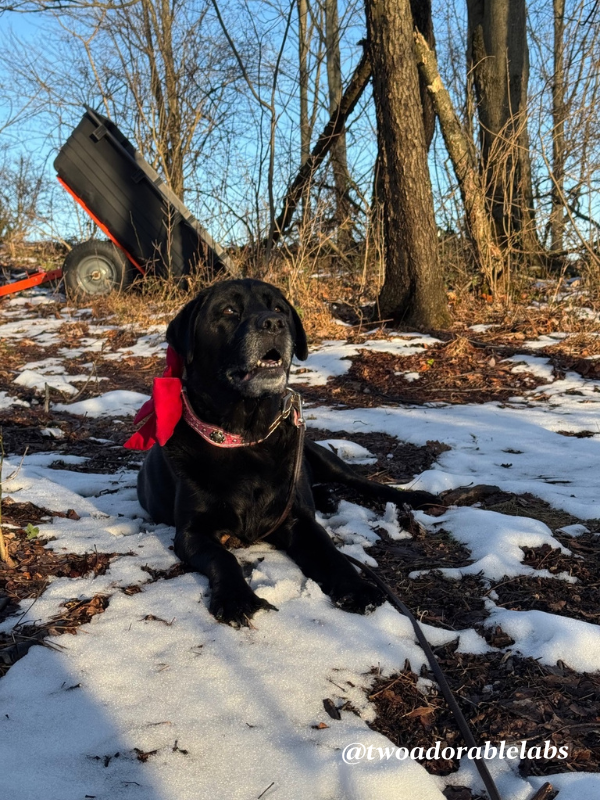
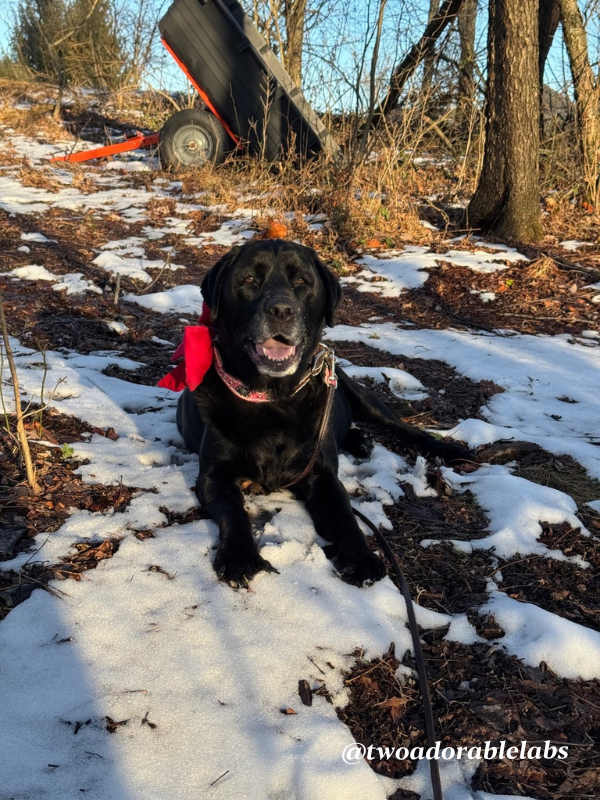
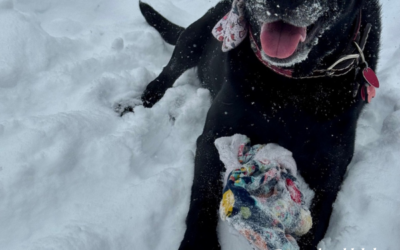
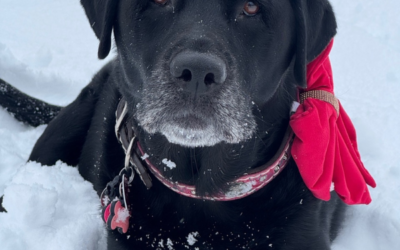
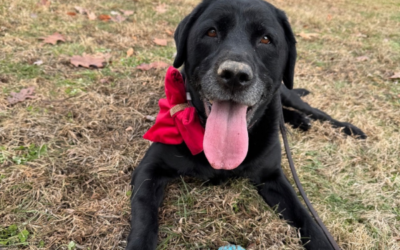
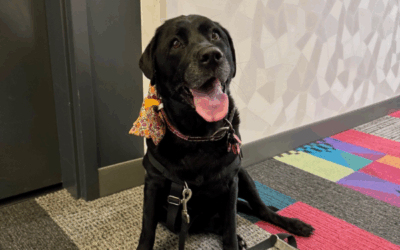
Happy Wednesday, everyone!  Do you find yourself saying “hi” to random dogs?  Maggie gets so much attention when we take her places, but what I really appreciate is when strangers ask if it’s ok to pet her.  It gives me a minute to assess the situation, read Maggie’s body language, and allows for a comfortable interaction for all of us.
 
I found this article online from Napizza.UK helps us understand the psychology behind the fascination with dogs and the normalization of social interaction with them.
 
What your “hello” to random dogs quietly reveals about you
 
Several personality studies link spontaneous interaction with animals to traits like openness, warmth and what psychologists call “social approach motivation”. In plain language, that’s your inner drive to connect, even when there’s no obvious reason. A quick wave at a dog you don’t know is basically a micro-declaration: “I am open to this moment.”
 
We like to think our personalities show up in big moments, during job interviews or arguments. But psychologists argue that our real signatures leak out in tiny, unscripted gestures. A hand raised to a passing dog is one of those leaks.
 
In one small study often cited in discussions about pet-related behavior, researchers found that people who described themselves as highly empathetic were far more likely to initiate contact with unfamiliar animals in public spaces. The team didn’t just ask questions; they observed people in parks, on city streets, at café terraces. Who reached out first? Who made eye contact with animals? Who avoided them?
 
Patterns emerged fast. People high in extraversion weren’t just more likely to talk to strangers — they were more likely to talk to strangers’ dogs. Those who scored high on agreeableness, the “kindness” dimension of personality, often used softer voices and gentle hand gestures, like a quiet wave. It wasn’t a grand, theatrical move. More a reflex of inclusion: you’re here too, little guy.


What your “hello” to random dogs quietly reveals about you cont’d
 
Interestingly, some introverts also showed a specific behavior: they skipped talking to the human and directed all their warmth to the dog. For them, waving at a dog acted as a safe social bridge. Connection, without the exhausting small talk. That tiny hello held a complex emotional shortcut.
 
Psychologists looking at these everyday rituals link them to what they call “anthropomorphic sensitivity” — how readily you treat non-humans as minds rather than objects. People who wave at dogs tend to score higher on this. They’re more likely to use words like “he” or “she” instead of “it” when talking about animals. They also report feeling less alone when animals are around, even if they never touch them.
 
There’s also something deeper at play: a comfort with vulnerability. Greeting a random dog means briefly dropping your guard in public. You risk being ignored, looked at oddly by the owner, or stepping outside the quiet, invisible rules of city behavior. People who do it regularly tend to tolerate that social risk. They are often less rigid about “how one should behave” in public spaces.
 
On the flip side, those who never greet dogs aren’t necessarily cold. They may be more conscientious, focused, or anxious about boundaries. Their inner script might say: don’t disturb, don’t distract, don’t get in the way. The absence of a wave can hide a very different trait — caution more than indifference.
How to greet dogs you don’t know (without being that weird person)
 
If you’re going to wave at a stranger’s dog, there’s a way to do it that respects the animal and the human at the other end of the leash. Psychologists and trainers largely agree on the basics. First, your greeting starts with the owner, not the dog. A quick glance, a small smile, maybe a soft “Hi, he’s cute” leaves space for a yes or a no.
 
Then, keep your wave small and relaxed, hand at your side or slightly in front of you, not looming over the dog’s head. Big, sudden arm movements can look threatening to nervous animals. Stay slightly angled instead of bending straight over the dog, which many can read as pressure. If the dog looks away, licks its lips or takes a step back, that’s your answer: the conversation is over before it began.
 
When the dog does lean forward, tail loose, body wiggly, your tiny wave can turn into a soft hello. Speak in a natural tone — not too high, not baby talk that puts pressure on the moment. The goal isn’t to collect a reaction. It’s to offer a small, optional invitation to connect.
 
On a busy pavement or in a park, it’s easy to get carried away. People who love dogs sometimes forget that not all dogs love strangers. Or that not all owners want their walk turned into a meet-and-greet. If the owner looks stressed, changes side of the pavement, or shortens the leash, that’s usually your cue to simply smile and keep walking.
 
Leaning over, clapping, or calling a dog loudly from a distance can create exactly the opposite effect to what you want. Many anxious dogs will freeze or bark, and their humans will have to manage the fallout. Nobody wants to be remembered as “the person who scared my dog” on the morning route. Respecting that possibility is part of the emotional intelligence behind a good dog hello.
 
Psychologists talk about “micro-boundaries” in public spaces — those invisible lines we negotiate without speaking. Waving at a dog, when done gently, can actually show high boundary-awareness. You’re saying: I see you, little creature, and I see your human too. That dual attention matters. People who focus only on the dog, ignoring the owner’s discomfort, slip from warm to intrusive faster than they think.
 
And there’s another trap: using dogs as emotional sponges on bad days. We’ve all had those mornings where you want to melt your face into the nearest Labrador and forget life for a minute.  That’s human. But unloading too much intensity on an unfamiliar dog can feel overwhelming to both dog and human. A light, respectful wave keeps things in the realm of shared moment, not quiet desperation.
 
“A stranger’s dog is not public property,” notes one clinical psychologist who studies everyday social behavior. “The way you greet that dog tells a story about how you handle desire, impulse and respect for others’ space. It’s never just about the dog.”
For readers who want a quick mental checklist before greeting a dog they don’t know, think in three beats:
 
Look at the owner first: do you sense openness or tension?
 
Offer a small wave or soft “hi” from a slight distance, not looming in.
 
Watch the dog’s body: loose and curious means maybe; stiff or turning away means no.
 
These tiny habits don’t just avoid awkward moments. They also train the same traits linked with that instinctive dog wave: empathy, awareness, and the ability to enter a moment without taking it over. It’s a kind of soft social workout, done in under ten seconds, on the way to your real life.
What your street-dog moments say about the way you move through the world
 
Once you start noticing who waves at dogs and who doesn’t, you can’t unsee it. The teenager who pretends not to care but secretly wiggles her fingers at a pug. The elderly man who stops for every single golden retriever as if greeting old colleagues. The young professional who only ever smiles at dogs when nobody is watching. These micro-scenes sketch out a quiet map of how people seek contact.
 
Personality researchers say behaviors like this are “low-stakes reveals”. The outcome doesn’t really matter. You won’t get a promotion from waving at a beagle. No one is grading you. That’s exactly why the gesture is so telling. In low-stakes moments, we drop performance and revert to habit. Those habits are soaked in our traits: shy or bold, tender or guarded, playful or strictly practical.
 
On a deeper level, these greetings hint at how you relate to vulnerability — your own and others’. A dog on a leash, navigating human spaces, is vulnerable by default. When you choose to greet that dog gently, you’re tuning into that vulnerability and responding with softness. When you bypass it entirely, you might be protecting your own emotional space. Neither path makes you a better or worse person. It simply sketches your style of moving among other beings.
 
There’s also a quiet social ripple. Owners of reactive or nervous dogs often feel judged or isolated. A restrained, respectful wave that doesn’t push contact can be a tiny act of solidarity: I see you doing your best with this animal. Dogs themselves may learn that humans in the city are mostly safe, kind presences — not looming threats. Over time, those repeated micro-moments can soften the sharp edges of urban life.
 
We’ve all had that moment where a stranger’s dog locked eyes with us on a tough day and, for no clear reason, things felt a little lighter. That relief isn’t magic. It’s a mix of biology, psychology and plain old mammal-to-mammal recognition. Whether you choose to wave, nod, or simply hold that eye contact for a heartbeat, you’re participating in a shared, wordless language.
So next time you catch yourself lifting your hand toward a dog you don’t know, or deliberately keeping your hands in your pockets, notice what’s happening inside you. That split-second decision is like a tiny mirror. It won’t define you. But it will show you something about what you need, what you’re ready to give, and how you really feel, weaving through other lives on the street.
 
Waving at unfamiliar dogs is associated with traits such as empathy, openness, and social approach motivation. Helps you read your own instinctive behavior as a quiet personality marker.
 
How you greet a dog — or don’t — reflects how you handle boundaries, vulnerability, and low-stakes connection. Invites you to rethink everyday street moments as meaningful rather than just background noise.
 
Small changes in how you wave, watch, and wait can turn random dog encounters into respectful, positive rituals. Offers a simple way to train social awareness and kindness in daily life.
 
Interested in pet-related topics, check out my older blogs:
 
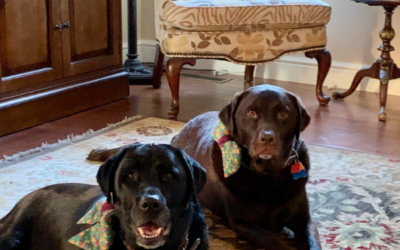
I’m Bobbi Jo, a lab-lover who took my passion for animals and dogs and turned it into something bigger.  When I adopted Jake and Maggie, my love for them became the driving force behind Two Adorable Labs, and my blog was born.  My hope is to not only share them with the world, but to help educate others on the importance of animal health and well-being.

Two Adorable Labs has become a collection of all that I love.  I’ll send one post each week on things that bring me joy on animal health, home decor, and food recipes for humans and our furry friends.  I hope you enjoy these posts and much as I do creating them!

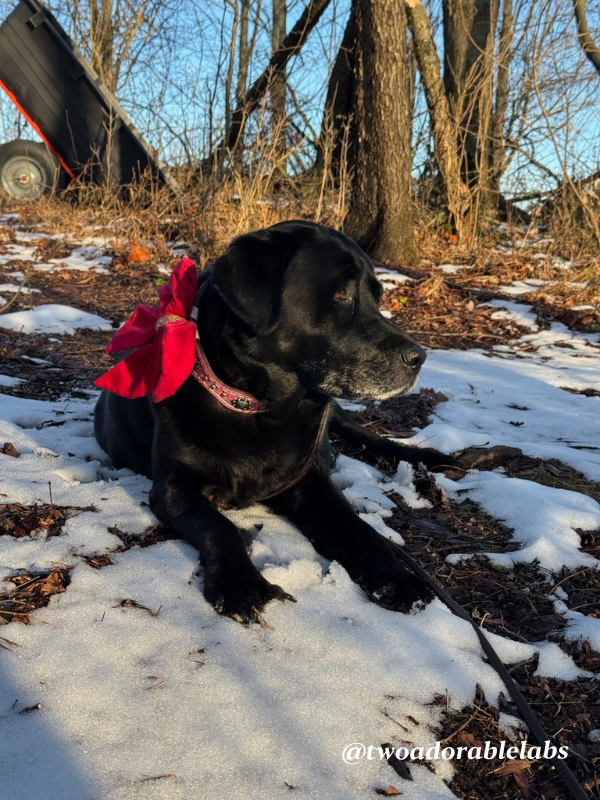
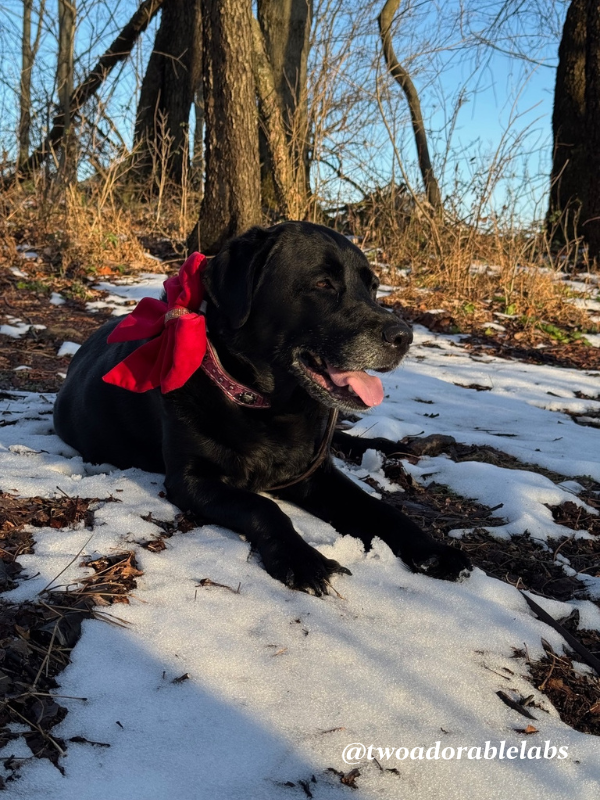
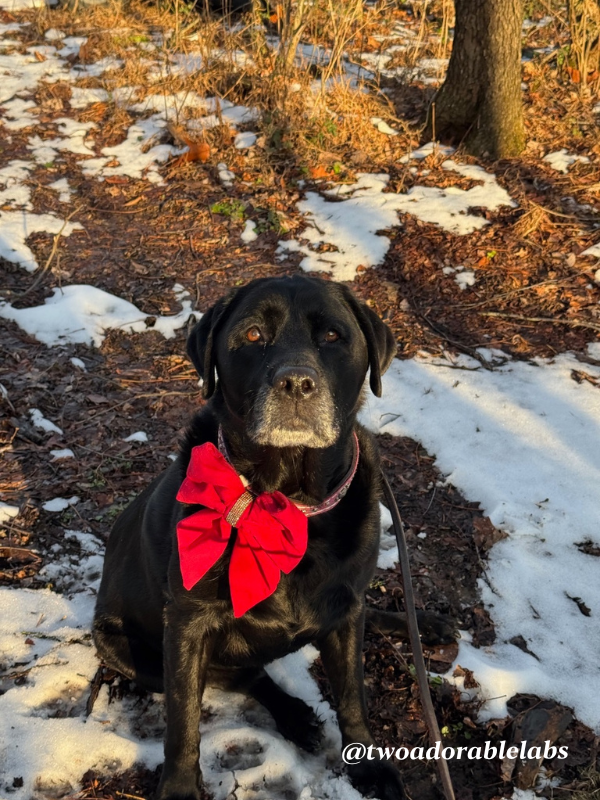
Maggie wearing her sailor bow in red velvet from Naughty Paws.

Maggie sported her new sailor bows all through the holidays and got so many compliments.  Check Naughty Paws out.  Use TWOADORABLELABS10 for 10% off your order.

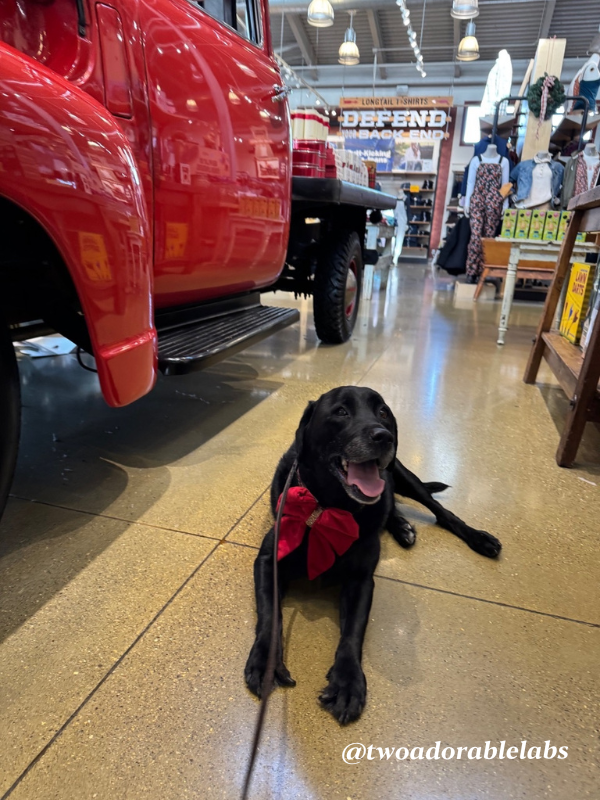
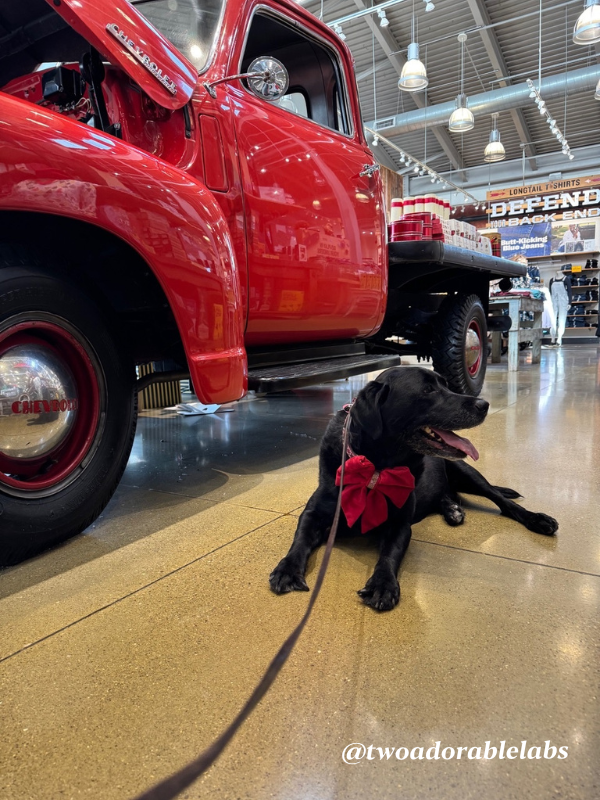
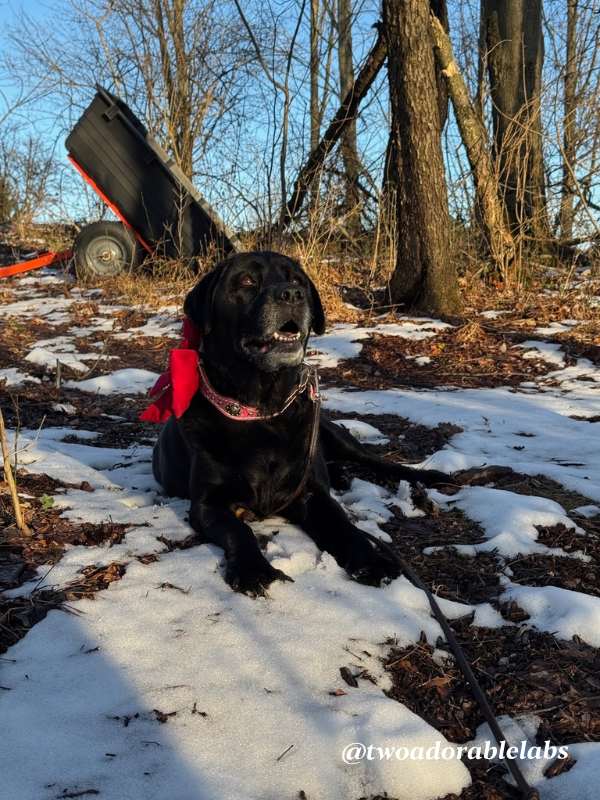
I was so happy to find that Duluth Trading allows dogs.  Maggie and I went Christmas shopping for Mr. TAL, enjoyed taking some pictures by their beautiful red truck and got some pets and tail wags along the way.
 

I love hearing from all of you and do my best to respond to each and every one of you.  I always enjoy your comments, feedback, and suggestions so keep them coming!  If I’ve posted a recipe (for our human and our furry friends) and you try it, don’t forget to tag me on Instagram @twoadorablelabs and use #twoadorablelabs​.

If you do try and love my recipes, I would greatly appreciate a comment and rating.  I read every single one and respond to them.  It also lets Google know that the website contains quality content.  The more comments and 5-star ratings, the more Google will show my blog in search results!  Thank you so much!

As an Amazon Associate, I earn from qualifying purchases.

Jake and Maggie are now proud Ambassadors for Ava’s Pet Palace.
Log on to avaspetpalace.com/twoadorablelabs for 20% off your order!

Love, Jake and Maggie

You Might Also Like
Sick Day? How to Stay Nourished While You Recover

Sick Day? How to Stay Nourished While You Recover

Happy Wednesday, everyone!  Sick Day? How to Stay Nourished While You Recover When you're feeling under the weather, your body shifts into a healing mode. This requires the right fuel so that you can feel as well as possible as quickly as possible. While your appetite...

7 Signs Of An Overstimulated Dog

7 Signs Of An Overstimulated Dog

Happy Wednesday, everyone!  I’m finally getting to our July 4th/birthday post that I’ve been promising.  Jake and Maggie had a great birthday with lots of treats and presents.  It was a hot day, and I made sure they spent enough time both indoors and outside to enjoy...

What Do You Think? Let Us Know!

1 Comment

  1. Sharon Crnko

    That was an interesting article. Hazel and I are still navigating our walks. She is 16 months now. We both love our walks, but she has gone from very nervous to more curious to see strange people, but still too much full on lounging with other dogs. So, right now we changes side the side of the street, reverse direction, or take to the fields. We are not giving up yet! Ha, ha! A small wave from me is self preservation!❤️

    Reply

Submit a Comment

Your email address will not be published. Required fields are marked *

This site uses Akismet to reduce spam. Learn how your comment data is processed.

Crop Image